





OpenSecrets reported that federal election spending in the United States surpassed $15 billion during the 2024 election cycle, highlighting how deeply political activity and financial influence are connected. Campaign financing has evolved far beyond fundraising events and election advertising. For politicians, donors, legal professionals, and politically connected executives, financial decisions tied to public life often shape long-term investment planning, disclosure strategies, and reputation management.
Advisors who work with politically exposed individuals frequently manage challenges that extend beyond traditional portfolio growth. Discussions involving compliance, public accountability, and ethical investing often overlap with broader conversations surrounding financial planning industries, particularly because lawyers, consultants, executives, and policy professionals are commonly involved in campaign fundraising and financial oversight. Research from The Brookings Institution suggests that public trust increasingly influences how high-profile individuals structure investments, charitable giving, and wealth preservation strategies.
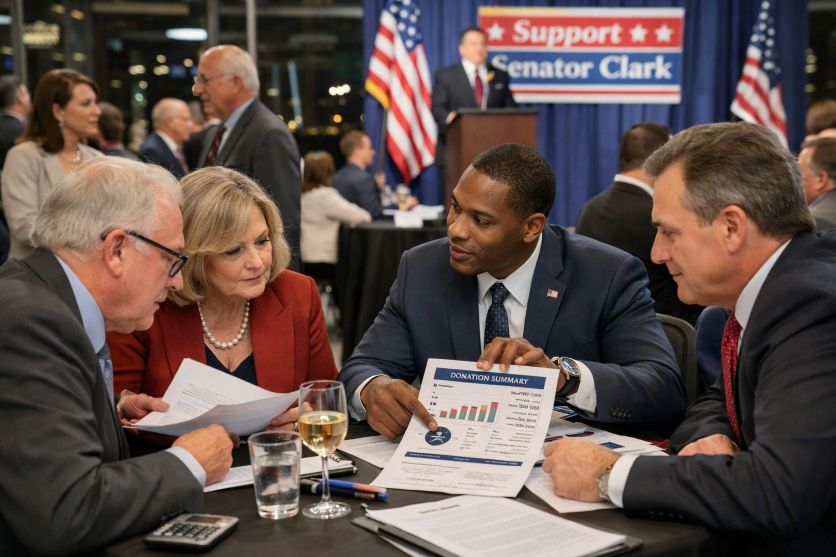
The Financial Pressure of Political Visibility
Public figures face a level of financial scrutiny that differs significantly from ordinary investors. Politicians and campaign donors may encounter ethics reviews, media investigations, mandatory financial disclosures, and public criticism tied to investment choices or corporate relationships.
The U.S. Office of Government Ethics requires many senior public officials and elected representatives to disclose assets, liabilities, gifts, and outside sources of income. Data indicates that these disclosure systems are designed to reduce conflicts of interest and strengthen accountability. At the same time, public disclosure can create additional risks when investment holdings become subject to political interpretation or media attention.
Financial advisors working in politically sensitive environments often respond by emphasizing diversification, reduced exposure to controversial industries, and carefully managed investment structures. Blind trusts, broad market funds, and long-term retirement vehicles are frequently used to reduce the appearance of conflicts while preserving financial stability.
Ethical Investing and Political Accountability
Debates surrounding ethical investing have become increasingly important in political finance discussions. Some critics argue that politicians and major donors should avoid investments connected to industries directly affected by legislation or government contracts. Defense contractors, energy companies, pharmaceutical corporations, and technology firms are often placed under additional scrutiny because of their close relationship with public policy.
Experts at Harvard Law School Forum on Corporate Governance note that environmental, social, and governance investing has gained momentum partly because reputation now carries measurable economic value. Public perception can influence board appointments, consulting opportunities, partnerships, and speaking engagements long after a political career ends.
Others believe that strict investment limitations create unfair disadvantages for public officials and donors who still require retirement planning and long-term wealth growth. Financial professionals frequently point out that politically connected individuals face the same inflation pressures, healthcare costs, and estate planning concerns as any other investor.
This creates a difficult balancing act between ethics and financial performance. Wealth advisors increasingly focus on investment strategies that combine transparency with sustainable growth. In many cases, they encourage clients to adopt diversified holdings and avoid concentrated positions in politically sensitive sectors.
Why Reputation Has Become a Financial Consideration
Political campaign financing now intersects closely with reputation management because public trust can directly affect financial opportunities. A donor or politician linked to controversy may experience business losses, damaged partnerships, or reduced investor confidence.
Edelman Trust Barometer research shows that transparency and accountability strongly influence how the public evaluates institutions and leadership figures. Financial planners working with politically visible clients often coordinate with accountants, attorneys, and communications professionals to prepare for scrutiny before problems emerge.
Modern wealth management in political circles increasingly resembles risk prevention rather than simple asset growth. Advisors may review charitable contributions, social media behavior, business affiliations, and campaign donation histories to evaluate how certain financial decisions could affect public perception.
Family offices connected to political figures frequently place additional attention on succession planning and multigenerational reputation. Spouses and children of public officials may also encounter scrutiny related to inherited assets or corporate involvement. As a result, estate planning structures and trusts are often designed with both financial and reputational protection in mind.
Campaign Donations and Regulatory Oversight
Campaign financing laws remain heavily regulated in many democratic countries. The Federal Election Commission establishes reporting requirements and contribution limits for federal campaigns in the United States, while similar oversight agencies operate internationally.
Research shows that large political donations can trigger enhanced due diligence procedures from banks, investment firms, and compliance departments. Financial institutions increasingly monitor politically exposed persons because anti-money laundering regulations require closer oversight of clients connected to government influence.
The Financial Action Task Force identifies politically exposed individuals as higher-risk clients who may require enhanced financial monitoring due to potential exposure to corruption or abuse of authority. These regulations affect how donors, public officials, and politically connected business leaders structure transactions and maintain records.
Critics sometimes argue that strict compliance systems discourage lawful political participation and create unnecessary administrative burdens. Others believe stronger oversight is essential for protecting democratic institutions from hidden financial influence. Advisors operating in this environment must balance client privacy with evolving transparency standards and legal obligations.
The Long-Term Impact of Political Financial Decisions
Political campaigns are temporary, but the financial effects connected to them can last for decades. Public figures who focus heavily on short-term campaign goals may underestimate how investment choices, donations, or business relationships affect future earning potential and reputation.
Experts from CFA Institute emphasize that disciplined long-term investing generally outperforms emotionally driven financial decisions. Political environments, however, naturally encourage reactive behavior because public controversies and election outcomes can create immediate pressure.
Experienced wealth advisors often encourage politically connected clients to separate campaign stress from long-term financial planning. Diversification, liquidity management, tax efficiency, and estate preservation remain important regardless of political success or public opinion shifts.
Some former public officials also transition toward philanthropic work, nonprofit leadership, or policy advocacy after leaving office. Charitable foundations and educational initiatives can provide structured ways to maintain influence while supporting broader legacy goals. Advisors frequently evaluate how philanthropy aligns with both tax planning and long-term public credibility.
The Expanding Role of Specialized Financial Advisors
Financial professionals serving politically exposed clients increasingly combine investment expertise with legal awareness, compliance knowledge, and media sensitivity. Wealth management in politically visible environments often involves collaboration with ethics attorneys, public relations specialists, and regulatory consultants.
PwC research indicates that reputation-related crises can produce lasting financial consequences for organizations and executives alike. For politicians and donors, controversy surrounding campaign financing or investment holdings may affect partnerships, speaking opportunities, and future leadership roles.
As political polarization and digital media scrutiny continue to intensify, advisors are adapting their approach to wealth preservation. The focus is shifting from simple asset accumulation toward long-term resilience, transparency, and reputational stability.
READ ALSO: Worst Case Scenarios if a Country Failed to Competently Manage its Economics and Finance
Conclusion
Political campaign financing shapes far more than election outcomes. It influences how public figures, donors, and politically connected professionals approach investing, compliance, estate planning, and reputation management. The ongoing debate surrounding ethical investing and political wealth reflects the challenge of balancing private financial freedom with public accountability.
Research and industry experience suggest that diversified investment strategies, transparent financial structures, and careful risk management can help reduce long-term exposure. Advisors working with politically visible clients increasingly recognize that reputation has become a financial asset with measurable value.
As campaign finance regulations evolve and digital scrutiny expands, wealth management strategies tied to politics will likely continue changing as well. Financial professionals, legal advisors, and compliance experts will remain central to helping public figures navigate a financial environment where visibility and accountability rarely disappear.

 More than 500,000 people in the United States rely on the Deferred Action for Childhood Arrivals (DACA) program to legally work and study. But every time political tides change, so does their financial stability. The DACA policy, first introduced in 2012, gave undocumented immigrants brought to the U.S. as children a chance to come out of the shadows. While it provided protection from deportation and work permits, it never offered permanent legal status. That limited protection continues to place DACA recipients at economic risk.
 At the Republican Party’s convention in Milwaukee last Thursday, Donald Trump promised to lower taxes as well as revert to encouraging fossil fuel extraction. The forme US president still believes that the climate-related programs are scams. Apparently Trump believes that the only way to stop inflation tis by increasing the country’s production of fossil fuels, for which the Republican presidential nominee chanted “We drill, baby, dril.” Trump fueled the imagination of his supporters by telling them that the US has more liquid than any other country in the world.
 Trump vows to put an end to the Democrats’ green
  everal legislators in Congress, coming from both political parties, are showing bipartisan support for new tax cut deals despite the country’s current record high national debt. Although the proposed legislation aims to help cash-strapped Americans and businesses, the bill is headed toward tough negotiations in the 2024 sessions.
 Republican lawmakers are pushing for the revival of three expired or phased out business tax credits the party introduced via a 2017 GOP-sponsored law. Yet sources say that negotiations for their
  Last week, the upper House or the Senate passed the debt ceiling bill, which Republican lawmakers have vowed to block at the lower house. However, Republicans failed to do so as the bill passed the
  Upon reaching the Senate, the bill that allows Pres.
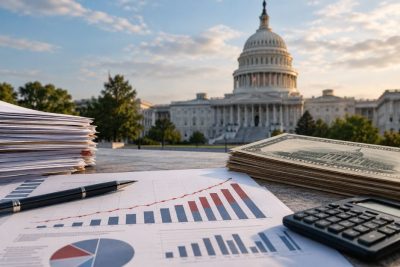 U.S. gross federal debt has moved above $40 trillion, turning a long-running fiscal debate into a more immediate financial issue. Reuters reported in early September 2026 that the milestone arrived as higher bond yields were increasing federal borrowing costs. The number itself does not mean the United States faces an immediate debt crisis, but the cost of carrying such a large debt burden is becoming harder for policymakers and investors to overlook.
 Government borrowing costs are climbing across several major economies, putting fiscal policy under greater pressure. A broad bond selloff in early September 2026 pushed yields higher in the United States, Europe and Japan. Japan’s 10-year government bond yield approached 3%, while German and French yields also reached levels not seen for many years. Investors are demanding greater returns as they weigh inflation, large deficits and growing public debt. Reuters reports that the shift is raising financing costs for governments as well as businesses and households.

 In 2024, India’s Unified Payments Interface (UPI) handled over 117 billion transactions worth more than $2 trillion. This digital marvel, born in Mumbai’s bustling fintech scene, now pulses through the veins of everyday life—from street vendors in Delhi to tech hubs in Bangalore. Picture a world where a simple QR code scan settles a bill in seconds, no cash needed. That’s UPI for you, a quiet revolution that has turned India into a global payments powerhouse.

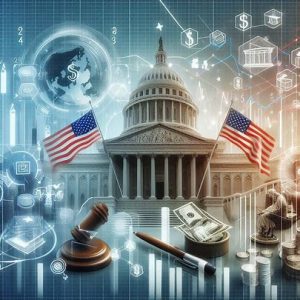 Politics and finance are deeply intertwined, with government policies having a significant impact on financial markets.





 is an online learning resource where individuals learn important actions to take to start a business and toward achieving financial success. Online programs present different
  According to Reuters the country’s post pandemic economy in 2022 and 2023 grew by 7.2% after the government boosted capital investments. Yet the Reuters report also mentioned the fact that India is now the most populous nation in the world after overtaking China with a record of 1.4 billion people. The significance of which is that nearly 53% of that population are below 30 years old, and most of which are without jobs. As a result, tens of millions of jobless young people could end up dragging down India’s economy.


